When digital art meets conservation: a young student creates an interactive experience for the Apollo
What can happen when a passion for insects meets art, technology and a desire to raise awareness about nature conservation?
The answer can be found in Project Parnassius, an interactive digital artwork created by Audi Duan, an 11th-grade student from the international department of The Experimental High School Attached to Beijing Normal University in China.
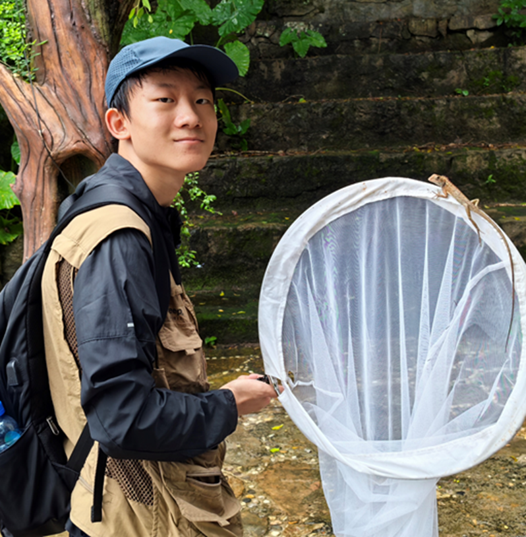
Audi describes himself as an insect lover. He spends much of his free time observing insects in the wild and had already known about the Apollo butterfly (Parnassius apollo) before starting the project. The idea of creating something dedicated to the species came from a concern he had noticed in the way people think about endangered wildlife.
“People care about endangered animals, but they rarely pay attention to endangered insects, sometimes just because they are too small to be noticed.”
Audi wanted to change that.
His goal was to create a project that would not only help people discover the Apollo butterfly, but also make them reflect on how much attention we give to insects compared with other endangered animals.
“My project aimed to raise public awareness on the Apollo butterflies, so that not only can people discover this magnificent species, but also can start thinking: have they paid the same attention to insects compared to other animals?”
From an idea to an interactive artwork
The project began with a concept drawing in which Audi imagined the interface and how people would interact with it.
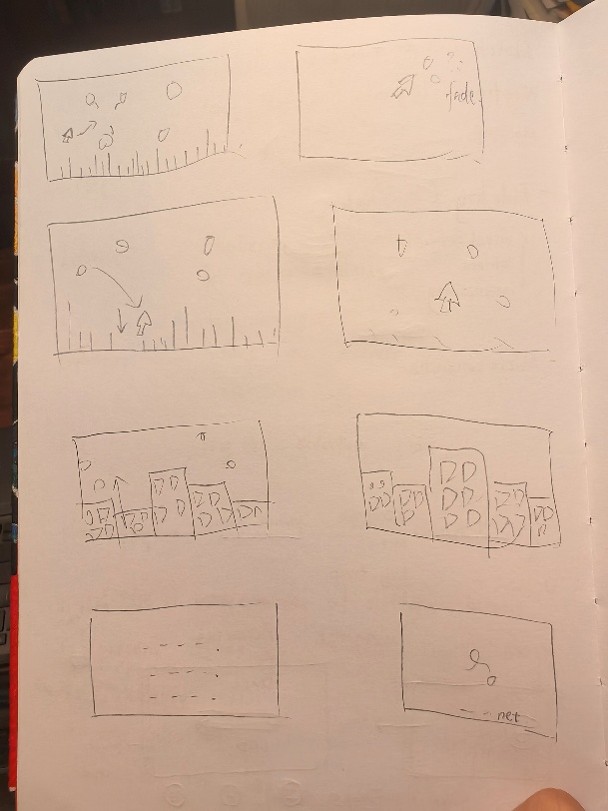
He developed the idea while attending Stanford’s Art, Design & Technology summer course, which explores digital, electronic and interactive art, as well as the use of technology as a form of human expression.
With limited programming experience, Audi turned to Microsoft Copilot to help translate his designs into p5.js code. Developing the artwork still required repeated testing, adjustments and debugging.

“Since I’m not good at programming, I used the LLM Microsoft Copilot to program. I give it my design and it can work out the corresponding codes on p5.js. However, its programming contains a lot of bugs. I need to talk to it for further adjustments and debugging.”
After working through the technical challenges, Audi created two versions of his project – Project Flow and Project Hand.
Project Flow – what happens when the meadow disappears?
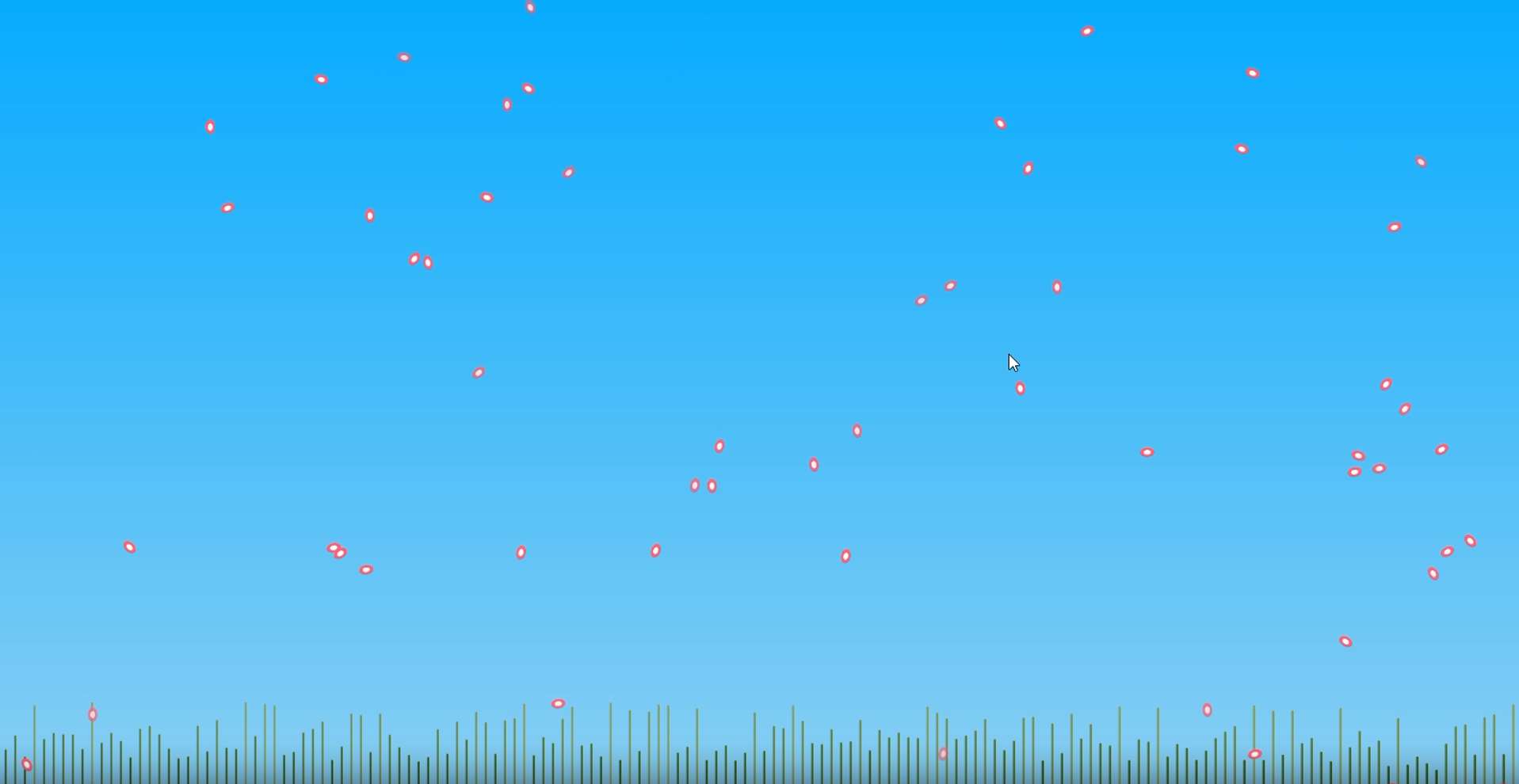
In Project Flow, the visitor enters a digital meadow. The weather changes randomly and numerous red dots move across the screen, each representing an Apollo butterfly.
Click to play:
The interaction is deliberately simple. As the visitor moves the cursor across the screen, the butterflies try to avoid it. When the cursor comes too close, they gradually fade away.
The red butterfly symbols were inspired by the characteristic spots on the wings of Parnassius apollo.


But the butterflies are not the only element affected by the visitor.
At the bottom of the screen is a layer of grass representing the meadow habitat. When the cursor touches the grass, it gradually becomes shorter. Even without direct interaction, the grass slowly disappears over time.
For Audi, this represents the impact of human activity on Apollo habitats.
“Parnassius apollo‘s habitats have been seriously affected by human activities, causing a dramatic decrease in their population.”
While the threats facing the Apollo butterfly are more complex, Audi uses the transformation of a meadow into a city as a visual representation of habitat loss.
As the grass disappears completely, something very different begins to emerge from the ground – skyscrapers.


The remaining butterflies quickly disappear.
The screen then turns black, creating a visual representation of the dramatic consequences of habitat loss.

Audi explains the idea behind this sequence:
“The question is that when reclaiming the meadows, nobody considers how it is closely related to the Apollos. Only when the butterflies were decreasing did people notice the disaster they had caused.”
This is the point of the project: the visitor does not necessarily realise at first what their actions are causing. The consequences become visible only when it is too late.
A small sign of hope
The experience does not end with complete darkness.
On the final screen, a single butterfly appears and continues to wander across the screen. Unlike the butterflies earlier in the experience, it is no longer affected by the visitor’s movements.
For Audi, this last butterfly represents the conservation efforts that have already been undertaken and the possibility that there is still hope.
“The last butterfly symbolizes the conservation efforts that have been taken, and it sparks a tiny piece of hope for the participants.”

Experience Project Flow:
https://editor.p5js.org/Audi_Duan/full/jSoSLdvE5
Project Hand – interacting with the butterfly using your hands
Audi also developed a second version of the project, called Project Hand.
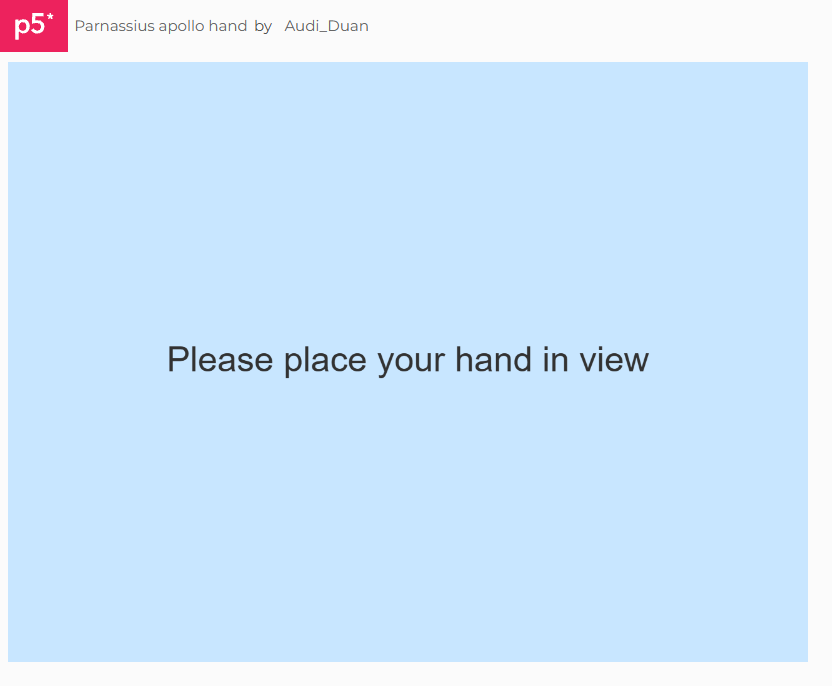
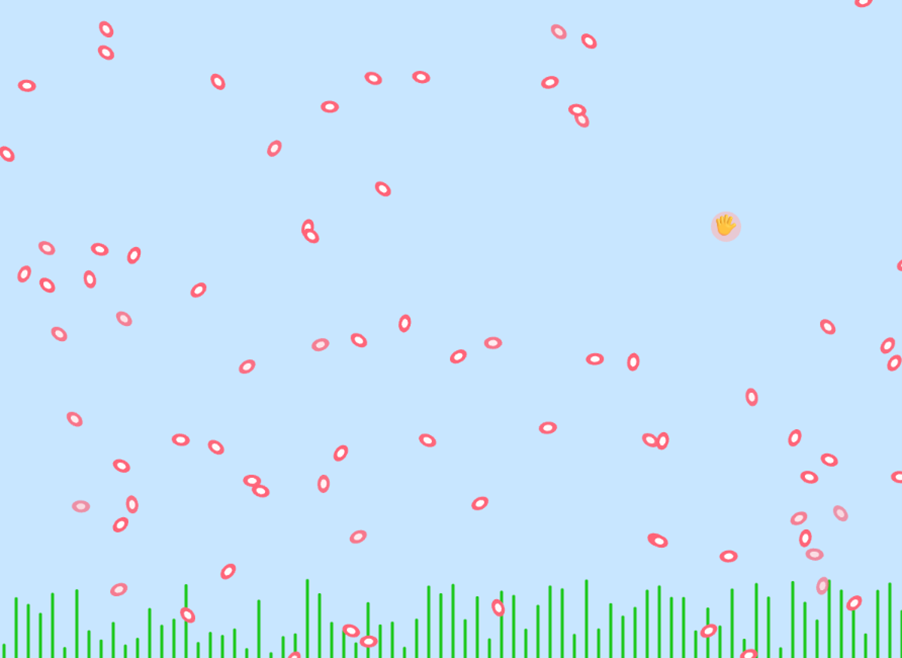
The idea remains the same, but instead of controlling the experience with a mouse, participants can use their hands. A camera captures their movements, while machine-learning technology based on TensorFlow™ allows those movements to be used as an interactive control.
To try it, first allow access to your camera, then wave your hand in front of it. The system may take a little time to respond. Eventually, you should see a meadow appear on your screen, with a hand that follows your movements.
Audi developed this version as a possible interactive artwork for public spaces.
“This model can be used as an interactive artwork in public spaces.”
Experience Project Hand:
https://editor.p5js.org/Audi_Duan/full/gBXX3eY4o
When conservation becomes a contemporary experience
What we particularly like about Audi’s project is the way he combines his interest in insects with digital art and interactive technology. Instead of simply presenting information about the Apollo butterfly, he invites people to interact with a digital environment and discover the consequences of their actions.
He took a subject that is usually communicated through scientific information, photographs or traditional educational materials and transformed it into something interactive and contemporary. By combining nature conservation with digital art, coding and machine learning, Audi created a way for people to experience the story of the Apollo butterfly rather than simply read about it.
At LIFE Apollo2020, we appreciate Audi’s initiative and the attention he has brought to this endangered species. His project shows how digital art and interactive technology can offer new ways to communicate conservation issues, particularly to audiences who may not normally engage with them.
We believe that this kind of creativity can help bring conservation issues to audiences who might not otherwise encounter them. By transforming a conservation message into an interactive experience, young people like Audi can help make the challenges faced by endangered species more accessible, engaging and visible.
And perhaps this is exactly what the Apollo butterfly needs – not only protection in the places where it still survives, but also people who will notice it, learn about it and care about its future. Audi’s project reminds us that raising awareness does not always have to begin with a scientific lecture. Sometimes, it can begin with a digital meadow, a few butterflies and a simple interaction that makes us realise what we might lose.