Horses on the wings of the Apollo butterfly
The Kruczy Kamień Nature Reserve in the Krucze Mountains is a unique place, not only because of its geological and landscape features, but also due to the abundance of thermophilic vegetation and the associated fauna. It is here that measures are being taken to restore suitable habitat conditions for one of Europe’s rarest butterflies – the Apollo, Parnassius apollo. An important element of these measures is the use of traditional methods of managing open land, including the grazing of livestock.


Kruczy Kamień – valuable habitats at the foot of the Krucze Mountains
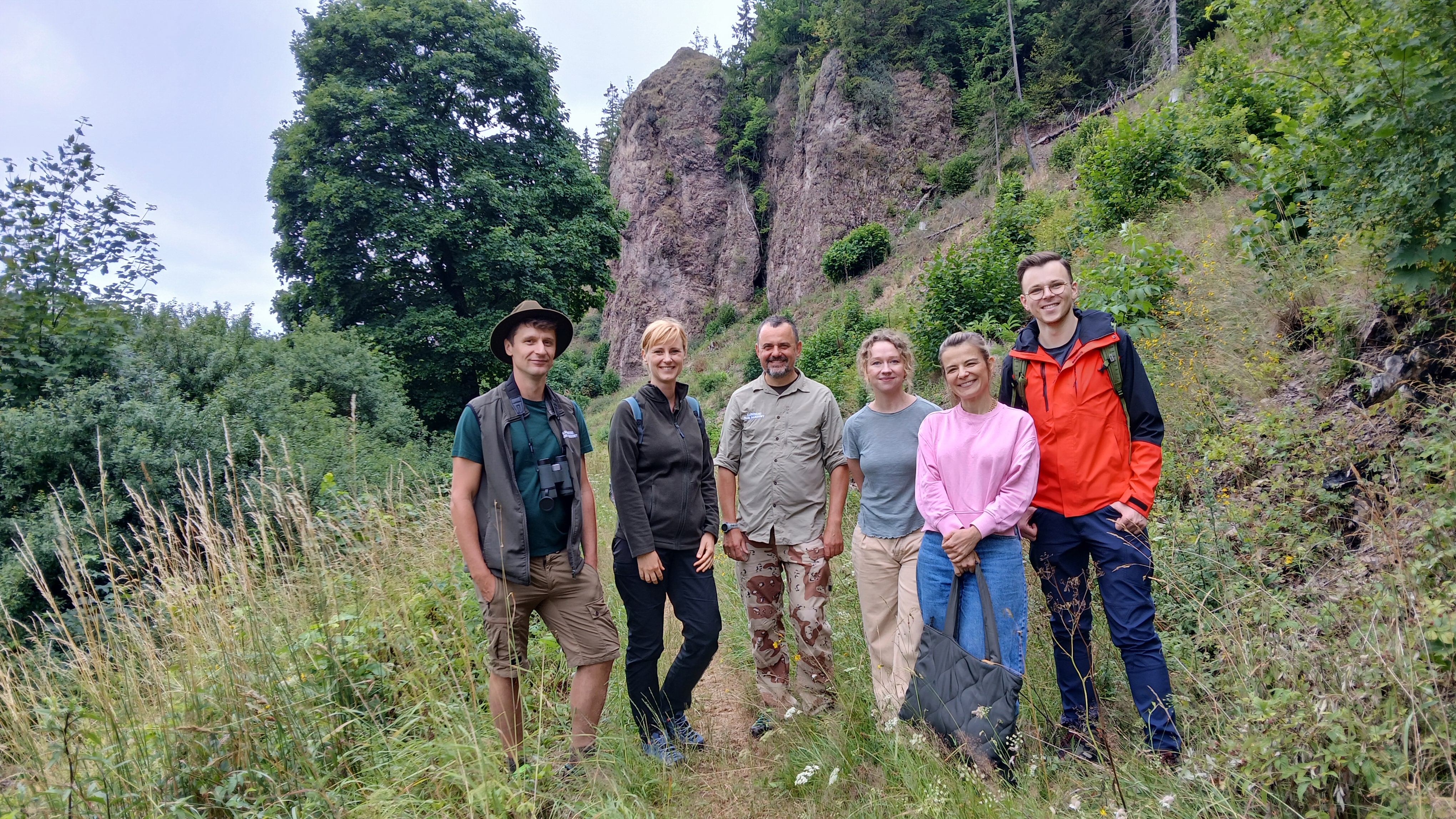
The Kruczy Kamień Nature Reserve, situated approximately 2.5 km south of Lubawka, was established in 1954. It covers an area of 12.61 ha and protects the western and south-western slopes of Krucza Skała, which rises to a height of 681 m above sea level. The reserve is renowned for its interesting rock formations composed of volcanic and sedimentary rocks; however, its ecological significance extends far beyond its geological features.
Of particular value are the Pannonian Festuco-Stipion grasslands, the xerothermic Festuco-Brometea grasslands and the rock-dwelling Androsacetalia vandellii communities found here, as well as the thermophilic pioneer vegetation communities of the Alysso-Sedion. Together, they form a mosaic of habitats of great importance for local biodiversity. Characteristic plant species include, amongst others, the white stonecrop (Sedum album) and the giant stonecrop (Hylotelephium maximum), which are of particular importance for the conservation of the Apollo butterfly, as they serve as host plants for its caterpillars.


A significant problem facing the reserve and the areas at its foot is the ongoing vegetation succession. With the cessation of traditional use of the meadows and grasslands, open areas are gradually becoming overgrown with tall grasses, shrubs and young trees. This leads to reduced light penetration, changes in vegetation structure and the gradual disappearance of habitats suitable for thermophilic species.
The Apollo butterfly requires open, sunny habitats
The Apollo prefers open, warm and sunny sites, such as mountain meadows, xerothermic grasslands and rocky slopes. The presence of host plants for the caterpillars, primarily stonecrop, is crucial to its survival. Adult butterflies, on the other hand, feed on the nectar of many species of flowering plants, including thistles (Cirsium sp.), cornflowers (Centaurea sp.), carnations (Dianthus sp.) and scabious (Knautia sp.).
In Poland, the Apollo is a critically endangered species. The main causes of its decline included the destruction and overgrowth of habitats, the conversion of meadows into agricultural land, and the capture of butterflies by collectors. In the Sudetes, the last populations, including the local subspecies Parnassius apollo silesianus, became extinct in the early 20th century.
The first attempts to reintroduce the Apollo in the Sudetes were made in 1994, specifically in the Kruczy Kamień Nature Reserve. The released butterflies survived here for over ten years. Reintroduction efforts were resumed as part of subsequent breeding and conservation projects carried out by the Karkonosze National Park. In 2019 and 2020, specimens of the Apollo butterfly were released once again in Sudeten in the vicinity of Kruczy Kamień and Chojnik Castle.


Restoring habitats to their proper condition
The conservation of the Apollo butterfly cannot be limited to simply breeding and releasing the butterflies. The key to the success of reintroduction is, above all, ensuring that they have suitable habitats where they can find food and complete their entire life cycle.
For this reason, in recent years, as part of the Life Apollo 2020 project, the Klub Przyrodników has been carrying out activities at Kruczy Kamień and in its immediate vicinity, aimed at halting succession and restoring the open character of the rocks, meadows and grasslands. In the winter of 2023/24, trees and shrubs were cleared from the reserve, and in the summer of 2025, goats were grazing there to help maintain the results of the work carried out. At the same time, work was undertaken on the meadow at the foot of the reserve. In the winter of 2024/25, saplings and shrubs were removed from the area, whilst in the autumn of 2025 the meadow was mown and the collected biomass removed.


These measures are intended to limit succession and restore suitable light and spatial conditions for nectar-producing meadow vegetation, as well as to reduce competition from expansive grass species. However, it is not only the one-off removal of shrub and tree saplings or the mowing of the area that is important, but also finding a way to maintain the achieved results in the long term.
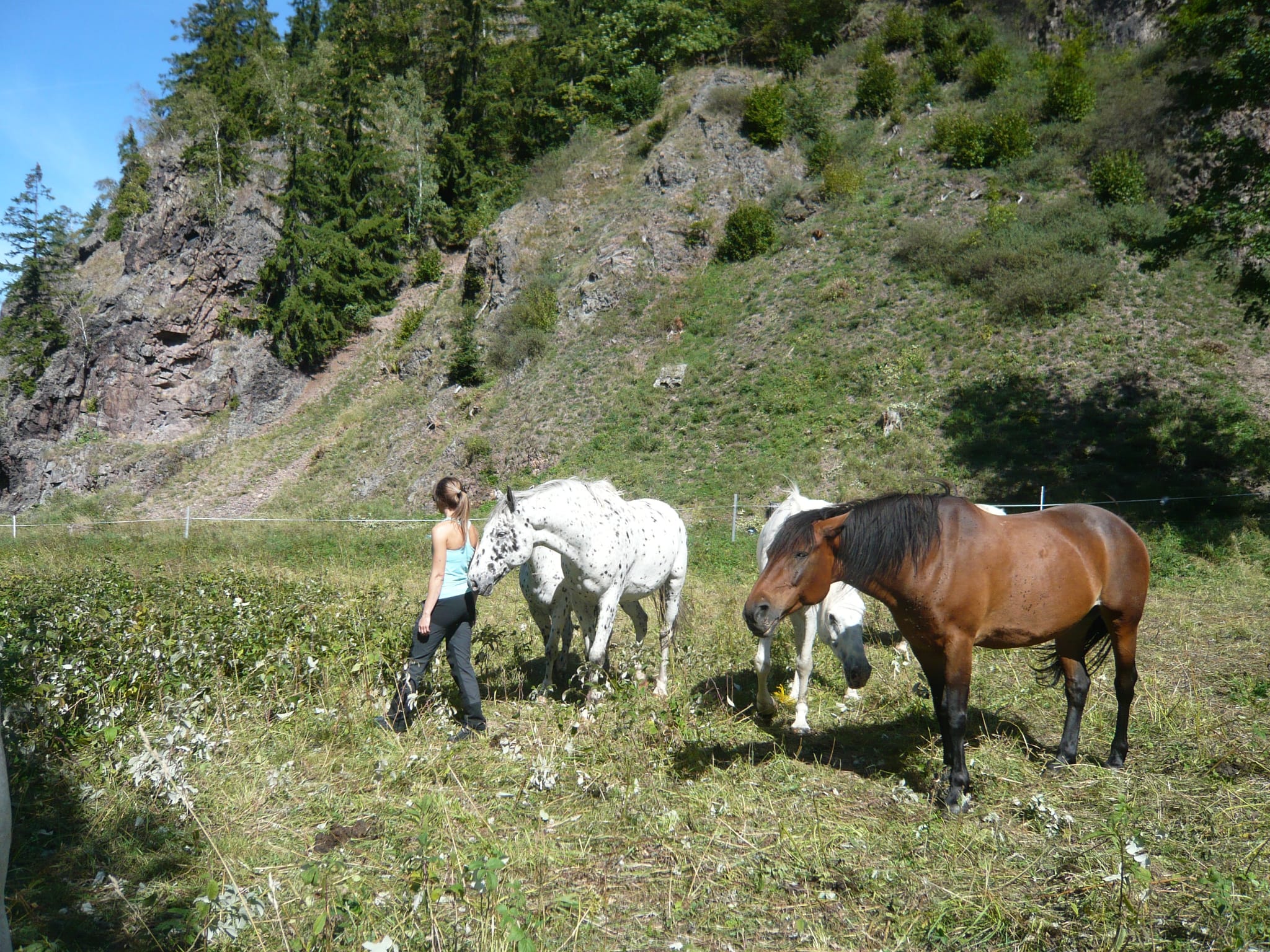
Horses in the meadow beneath Kruczy Kamień
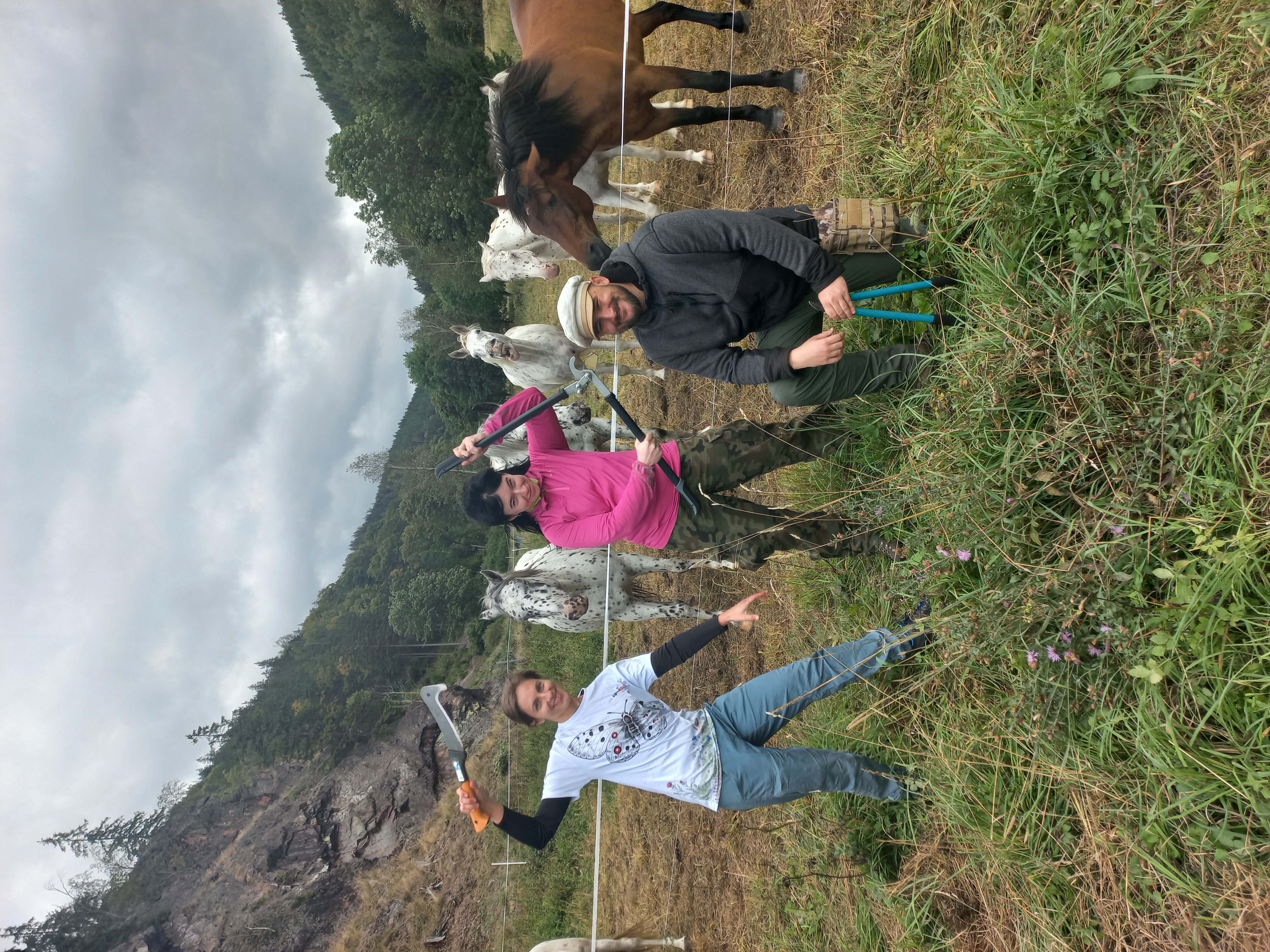
The LIFE Apollo2020 horse-keeping volunteer initiative has become one of the key elements of conservation efforts and community engagement. Throughout September, volunteers looked after the horses, attending to their daily needs and carrying out tasks related to the maintenance of open spaces. The presence of the horses and the organisation of work around them provided an opportunity to combine practical nature conservation with active volunteering.
During this time, thanks to the volunteers, it was also possible to fully complete the planned clearing of part of the reserve’s slope, which the goats had previously been unable to tackle completely. The volunteers also raked up the biomass from the meadow that had been mown earlier during workshops on traditional scything. Furthermore, they took part in collecting and planting stonecrops, which will be used to create further habitats for the Apollo butterfly, as well as in educational activities aimed at visitors.
The volunteers themselves also gained valuable knowledge and experience regarding the practical conservation of valuable open habitats. They also had the opportunity to interact directly with experts working on the project, as well as the chance to take part in a major initiative aimed at the restoration of an endangered species.
The project demonstrated that habitat conservation can combine various forms of activity – from traditional land management practices, through the use of animals, to the involvement of volunteers. Of particular importance was the combination of caring for the horses with the work carried out on the slopes and in the meadow at the foot of Kruczy Kamień.

What can we learn from experiences with grazing horses?
Grazing of livestock is increasingly being used as a long-term tool for managing valuable natural habitats. When carried out appropriately, it can limit the dominance of expansive grasses, thereby increasing the species and structural diversity of vegetation in meadows and grasslands.
Interesting examples are provided by the experiences of our Czech project partners – Vzdělávací a informační středisko Bílé Karpaty (VIS) from the Bočky Nature Reserve in the White Carpathians. It was observed there that horses were more effective than sheep at thinning out dense vegetation. Small patches of exposed soil emerged, allowing the spread of greater stonecrop, whilst the dominance of sand reedgrass (Calamagrostis epigejos) was reduced. An improvement in habitat quality was observed as early as the first year of grazing.
However, the results of comparative trials conducted in Poland indicate that different animal species can fulfil distinct functions. Goats perform well on rocky slopes and effectively limit the growth of shrubs; sheep can be used to maintain host plant habitats and manage meadows; whilst cattle are suitable for meadows rich in nectar-producing plants.
Why horses, of all other animals?
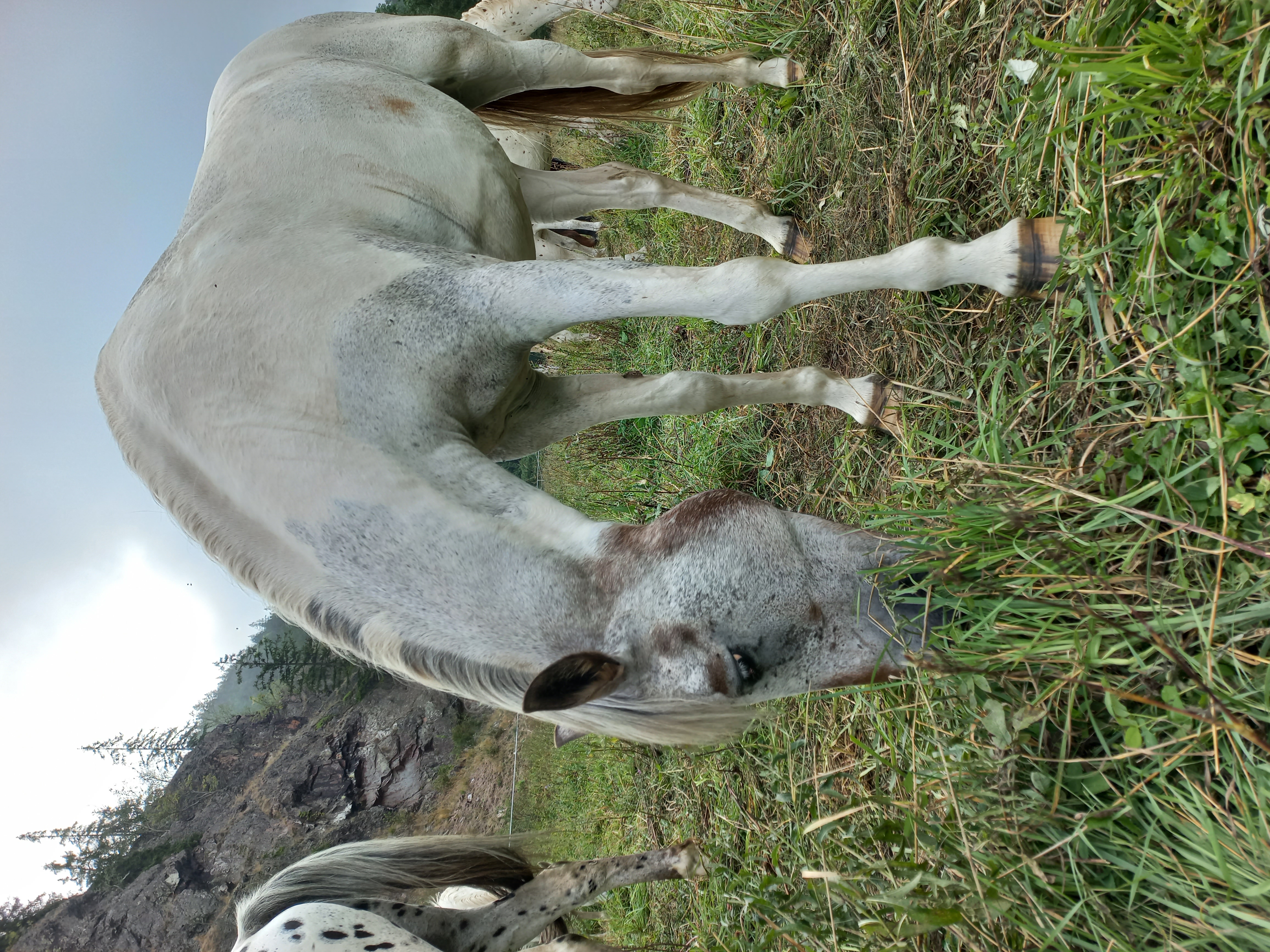
The choice of horses as animals used in the conservation of meadows and grasslands is justified by research into their impact on the structure and diversity of vegetation. As indicated in Anna Chodkiewicz’s literature review (2020), extensive grazing by horses can lead to the formation of a mosaic of plant communities, comprising both low, intensively grazed patches and areas of taller vegetation. Horses primarily graze on taller grasses, limiting their dominance and improving light penetration to the lower layers of the sward. Their presence may also reduce the thickness of the mulch layer, expose small patches of soil and create conditions favourable for the germination and growth of new plants.
Research carried out in France has shown that horse grazing can be more effective than sheep grazing in limiting the dominance of tall grasses, which are of little nutritional value to other farm animals (Catorci et al. 2012). Researchers in Portugal, on the other hand, highlight the characteristic foraging behaviour of horses, which helps to maintain short vegetation within a mosaic of taller grass patches. Such a heterogeneous structure can be beneficial for many plant and animal species, including invertebrates (Fleurance et al. 2012).

This does not, however, mean that a single instance of horse grazing will solve the problem of overgrowth in meadow and grassland habitats. Research indicates that its effectiveness depends on appropriate stocking rates, the duration of grazing and habitat conditions. Horses do not eliminate all young trees and shrubs; therefore, it may be necessary to periodically introduce additional measures such as mowing and the removal of unwanted vegetation. Overly intensive grazing can also have adverse effects, in the form of excessive damage to vegetation and the enrichment of the soil with nitrogen from the animals’ manure and urine.
In the case of the meadow at the foot of Kruczy Kamień, horses may therefore provide a valuable complement to existing conservation measures. Properly planned grazing not only helps to limit the dominance of tall grasses but also fosters a more diverse meadow structure, favouring plants that flower at different times of the year and the insects associated with them. Combined with mowing, shrub removal and the restoration of sedum habitats, it can become a key element in the long-term conservation of the Apollo butterfly’s habitats.
The conservation of the Apollo butterfly is not merely about protecting a single, unique species of butterfly. It is also about restoring the traditional landscape of meadows and grasslands, whose diversity has been shaped over the centuries by both humans and farm animals.
References:
Chodkiewicz A. 2020. Advantages and disadvantages of Polish primitive horse grazing on valuable nature areas – A review. Global Ecology and Conservation, Volume 21, e00879.
Catorci A., Gatti R., Cesaretti S. 2012. Effect of sheep and horse grazing on species and functional composition of sub-Mediterranean grasslands. Appl Veg Sci, 15: 459-469.
Fleurance G., Edouard N., Collas C., Duncan P., Farruggia A., Baumont R., Lecomte T., Dumont B. 2012. How do horses graze pastures and affect the diversity of grassland ecosystems?. In: Saastamoinen, M., Fradinho, M.J., Santos, A.S., Miraglia, N. (eds) Forages and grazing in horse nutrition. Forages and grazing in horse nutrition, vol 132. Wageningen Academic Publishers, Wageningen.